


Bisabolol content in marijuana is not very high compared to other Terpenes such as Caryophyllene, Pinene, and Limonene, but even so, this secondary Terpene contributes earthy, floral, and vanilla notes to many strains.
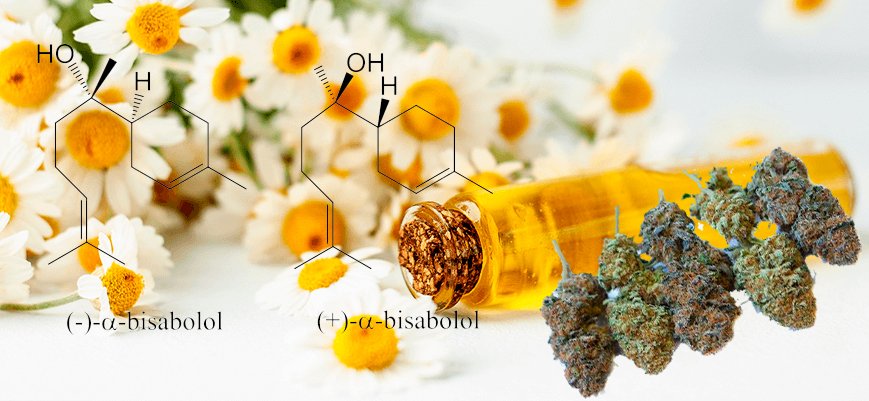
Bisabolol Chemistry
Bisabolol is larger than other Terpenes, therefore falls into the category of sesquiterpenes. These compounds are made up of three isoprene units and have a total of 15 Carbon atoms, with a chemical formula of C₁₅H₂₆O.
This Terpene has several different isomers: molecules with the same atoms but arranged in different ways. α-Bisabolol is the most common and best studied of these compounds and can occur in two different enantiomers: (+)-α-Bisabolol and (-)-α-Bisabolol (also known as Levomenol). Other isomers include β-bisabolol and the A-isomer of bisabolol.
In addition to its presence in certain marijuana varieties, Bisabolol is also found in other parts of nature, such as chamomile, sage, patchouli, and some lavender varieties.

Bisabolol Aroma and Flavor
Bisabolol is a minor Terepene in cannabis so it is present in much lower concentrations than major Terpenes such as Limonene and Myrcene. However, α-Bisabolol contributes flavors and aromas to some marijuana strains.
Bisabolol’s aromas can be divided into three categories. The most dominant in its profile are the sweet and floral notes of chamomile. It offers other secondary aromas, which are also sweet, with nuances of honey and vanilla. Finally, its profile is rounded out with hints of fruit, nuts, and pepper.
Its flavor is very similar to its aroma, with sweet, floral, herbal, and earthy notes.

Bisabolol effects in marijuana
In addition to providing very pleasant flavors and aromas to some marijuana strains, Bisabolol can also directly influence their effects.
Although the cannabinoids THC and CBD are primarily responsible for the effects of certain marijuana strains, Terpenes are able to establish a synergistic relationship with cannabinoids and direct the effects in certain directions.
In general, Bisabolol exerts a calming and relaxing physical effect. It has not yet been determined whether Bisabolol binds directly to the endocannabinoid receptors in the same way as THC, but both Bisabolol and THC are known to activate T-type calcium channels, which are the targets of medications intended to treat pain and other neurological symptoms, suggesting a possible synergistic relationship at the molecular level.
.