

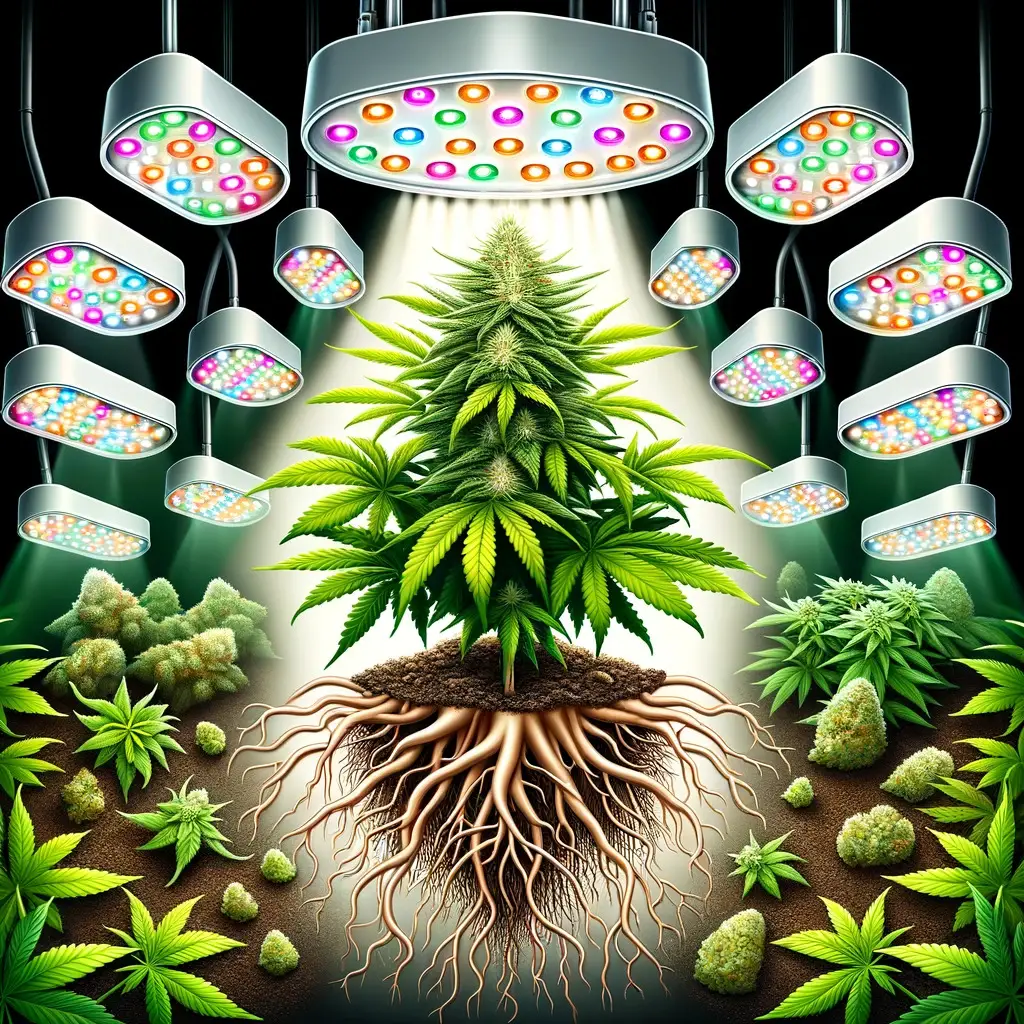
When we talk about lighting in cannabis cultivation, we have to say that it’s probably one of the most important aspects of indoor growing and here I’m gonna tell you everything I know about it.
Ballasts
The purpose of Ballasts is to regulate the amount of electrical current entering a lighting system.
Metal halide and high-pressure sodium lamps produce light through an electric arc connecting two tungsten electrodes. For them to function, they need a high initial power supply. Once they are on, these lamps, only require a low and stable voltage. Ballasts are used to maintain the voltage necessary for effective lighting, while also protecting the bulbs from excess current that could break them or significantly reduce their lifespan.
There are two types of Ballast:
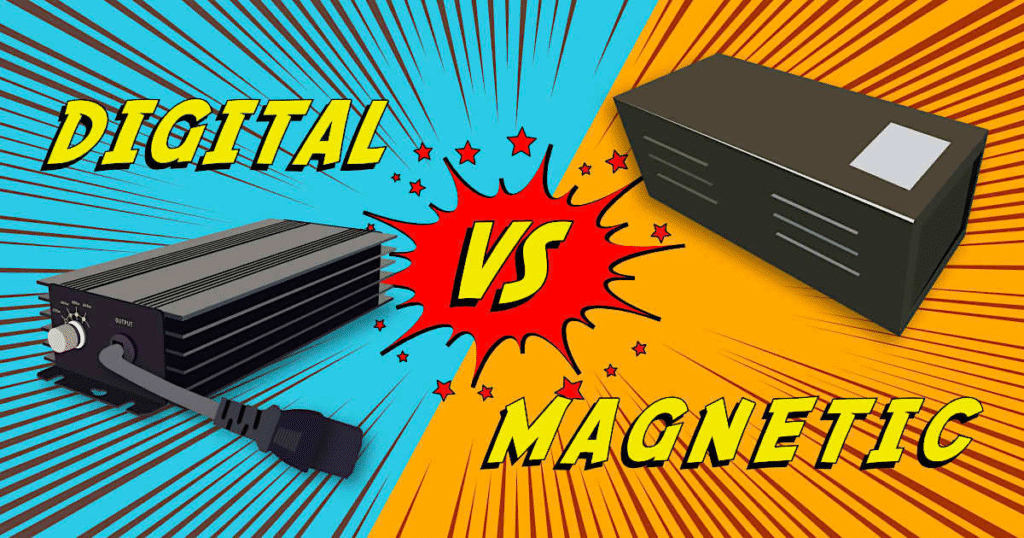
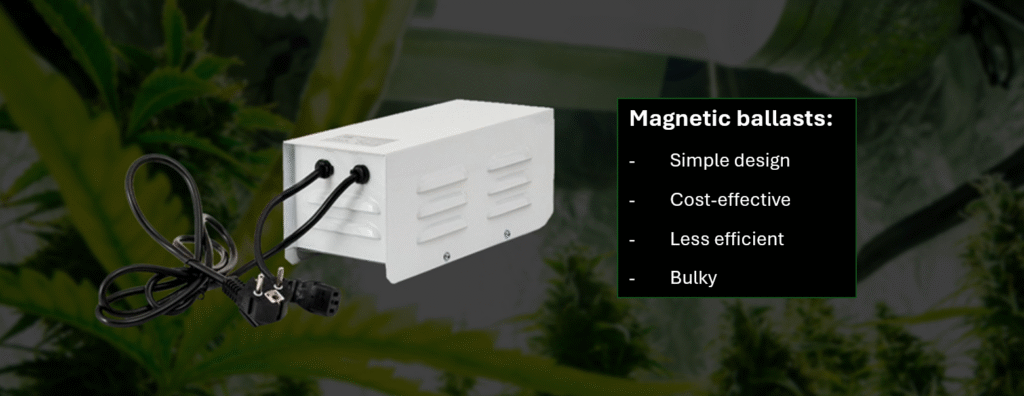
Magnetic Ballasts
Magnetic Ballasts are older and simpler than Electronic Ballasts. These devices use electromagnetic induction to control the current flowing to the light bulb.
Electronic Ballasts
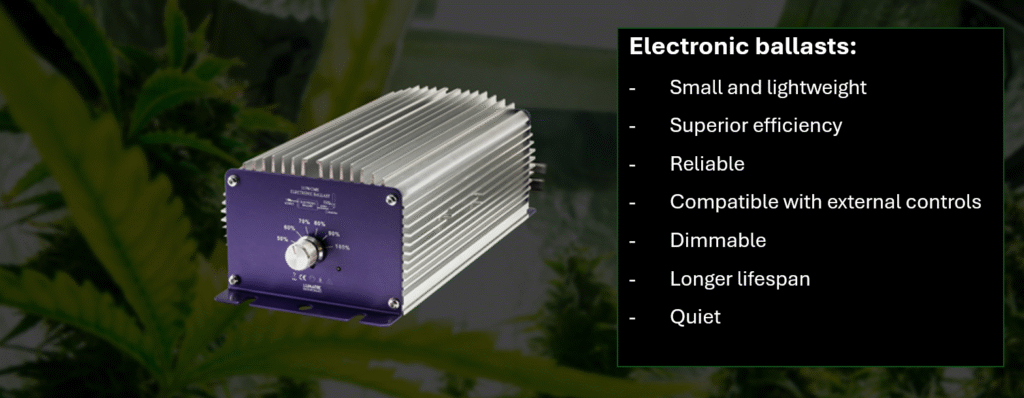
HID (high-intensity discharge) lamps for growing cannabis use electronic ballasts, and they are the most advanced and efficient option. Also known as Digital ballasts, they contain microprocessors that regulate and control the voltage delivered to the bulb.
These ballasts are connected to reflectors so that lighting can be produced through them.
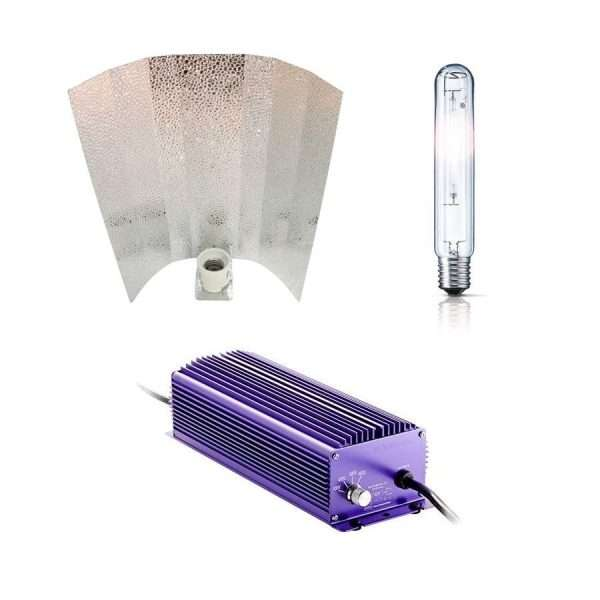
However, this technology is hardly used anymore since technological advances have left it behind and nowadays LED lighting has nothing to envy to sodium and halide lighting, but if you still use it, remember that autoflowering seeds do it very well with sodium lighting from beginning to end, while photoperiod seeds do it well with sodium and halide at the same time.
LEDs and additional functions
LED panels offer numerous advantages, although their initial purchase cost may be higher than that of conventional HPS or CMH lighting (ballast, reflector, and bulb). Maintenance is significantly cheaper; conventional lighting bulbs only need replacing every two or three growing cycles at most due to their loss of efficiency (lower yields with the same electricity consumption). Therefore, LEDs are considered a long-term investment, saving money on bulbs and increasing energy efficiency. They offer higher yields with lower electricity bills (a LED panel can operate for approximately 50,000 hours without losing efficiency).
And thanks to the lower heat emission of LEDs, the indoor growing season can be extended, making it possible to grow year-round in many areas — something impossible with conventional HID systems without air conditioning. LEDs for professional horticulture aim to mimic natural sunlight, both in intensity and spectrum, for optimal plant development (growth and flowering), and this spectrum (light assimilated by plants) is much more complete in a LED than in conventional discharge lamps.
Characteristics of a Grow light LED
Coverage Area
In addition to your budget, you should be clear about the area you want to cover; this is specified in the description of any LED.
There are LEDs on the market suitable for grow tents or areas of 60 x 60 cm, 80 x 80 cm, 1 x 1 m, 1.20 x 1.20 m and 1.5 x 1.5 m.
PAR
PAR (Photosynthetically Active Radiation) is the light that plants can assimilate to perform photosynthesis correctly (wavelengths from 400 to 700 nm); not just any LED will do, only those designed for horticulture. A high-power LED without the corresponding PAR for plants will not produce good results in your grow tent.
Most LEDs for cannabis have the correct PAR for the entire plant life cycle, and some include—in addition to red LEDs for flowering—far-red LEDs (Emerson Effect) or even UV to finish the harvest with extra resin.
The Emerson Effect occurs when plants are exposed to light with a wavelength greater than 680 nm, activating the PS700 photosystem, which produces ATP (energy for the plant). We explain it in more detail below.
Efficiency
PE/Efficiency (Photosynthetic Efficiency) is the amount of light useful for photosynthesis per unit of energy consumed by the LED and is expressed in micromoles per joule (µmol/J). The greater the capacity to produce light usable by plants (PAR), the greater the efficiency of the LED panel.
We can consider a LED efficient starting at 1.5 µmol/J.
PPF and PPFD
PPF and PPFD are terms used especially in horticulture to describe the light that plants receive and how it can affect their development (growth and flowering).
PPF (Photosynthetic Photon Flux) measures the total amount of photons useful for photosynthesis that the LED emits per second, and is expressed in micromoles per second (µmol/s). This measurement indicates the total amount of photosynthetically active light (absorbable by plants), but it doesn’t indicate how that light is distributed in space or whether it is actually reaching all the plants.
The minimum acceptable values are 400 to 600 µmol/s.
PPFD (Photosynthetic Photon Flux Density) measures how many of the photons useful for photosynthesis reach a specific surface per second, expressed in micromoles per square meter per second (µmol/m²/s). This measurement is essential because it indicates the amount of light a plant is actually receiving to carry out photosynthesis, which directly affects its growth and flowering.
An acceptable PPFD would be from 200 to 400 µmol/m²/s (growth) and from 600 to 1000 µmol/m²/s (flowering).
Key Differences:
- PPF measures the total amount of useful light emitted by the LED (gross).
- PPFD measures the amount of that light on a given surface (the amount that reaches the plants).
Both parameters are important in horticulture, since optimizing light for plant growth depends not only on the amount of light emitted, but also on how much of that light is actually used by the plants. A lamp that produces a lot of light is useless if it barely reaches the plants!
– For seedlings (newly germinated), cuttings, and mother plants (genetic maintenance), you need a PPFD between 200 and 400 µmol/s/m².
– For mother plants and vegetative stage, you require a PPFD of 400 to 600 µmol/s/m².
– And for flowering, from 600 to 1000 µmol/s/m².
Grow Lights and Heat Emission
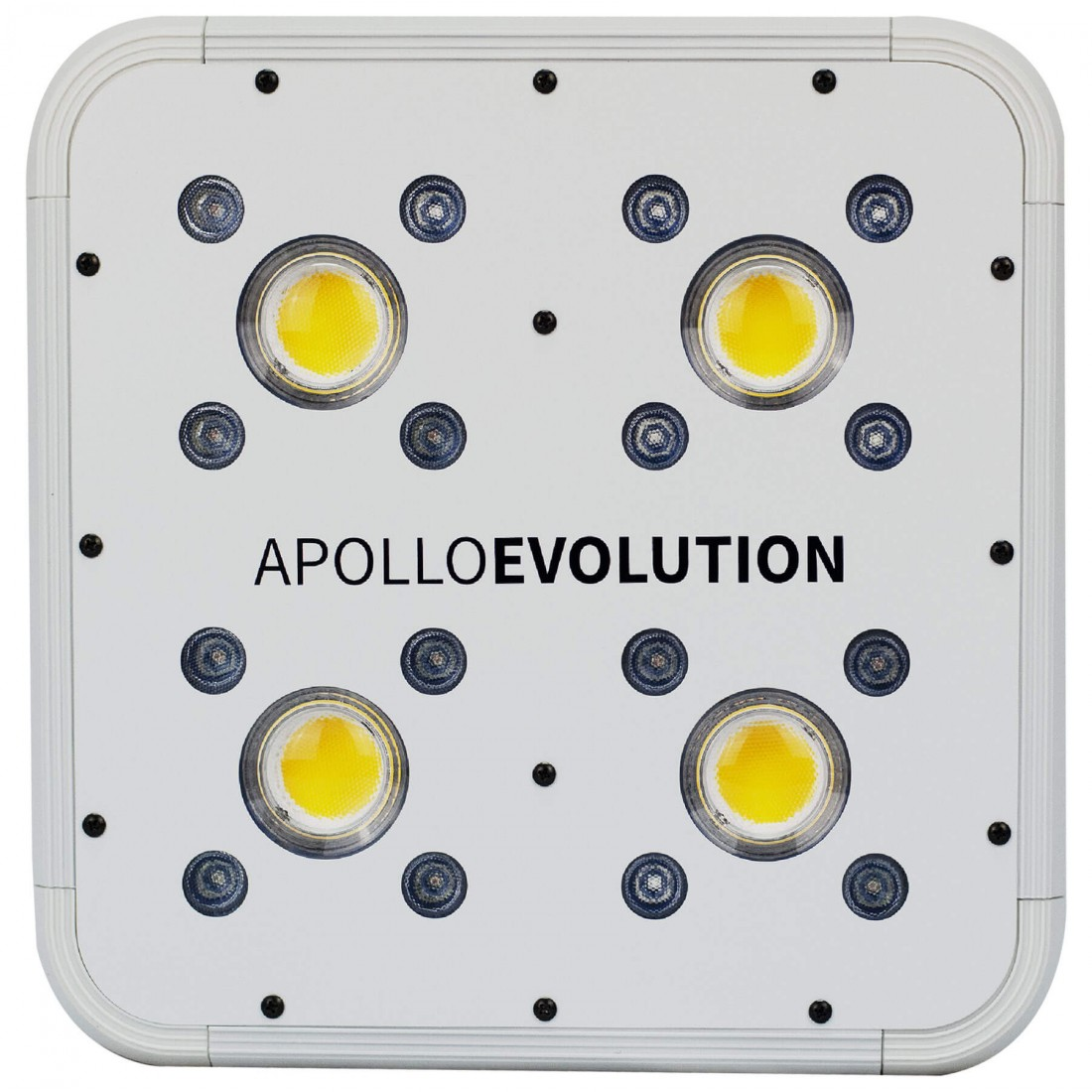
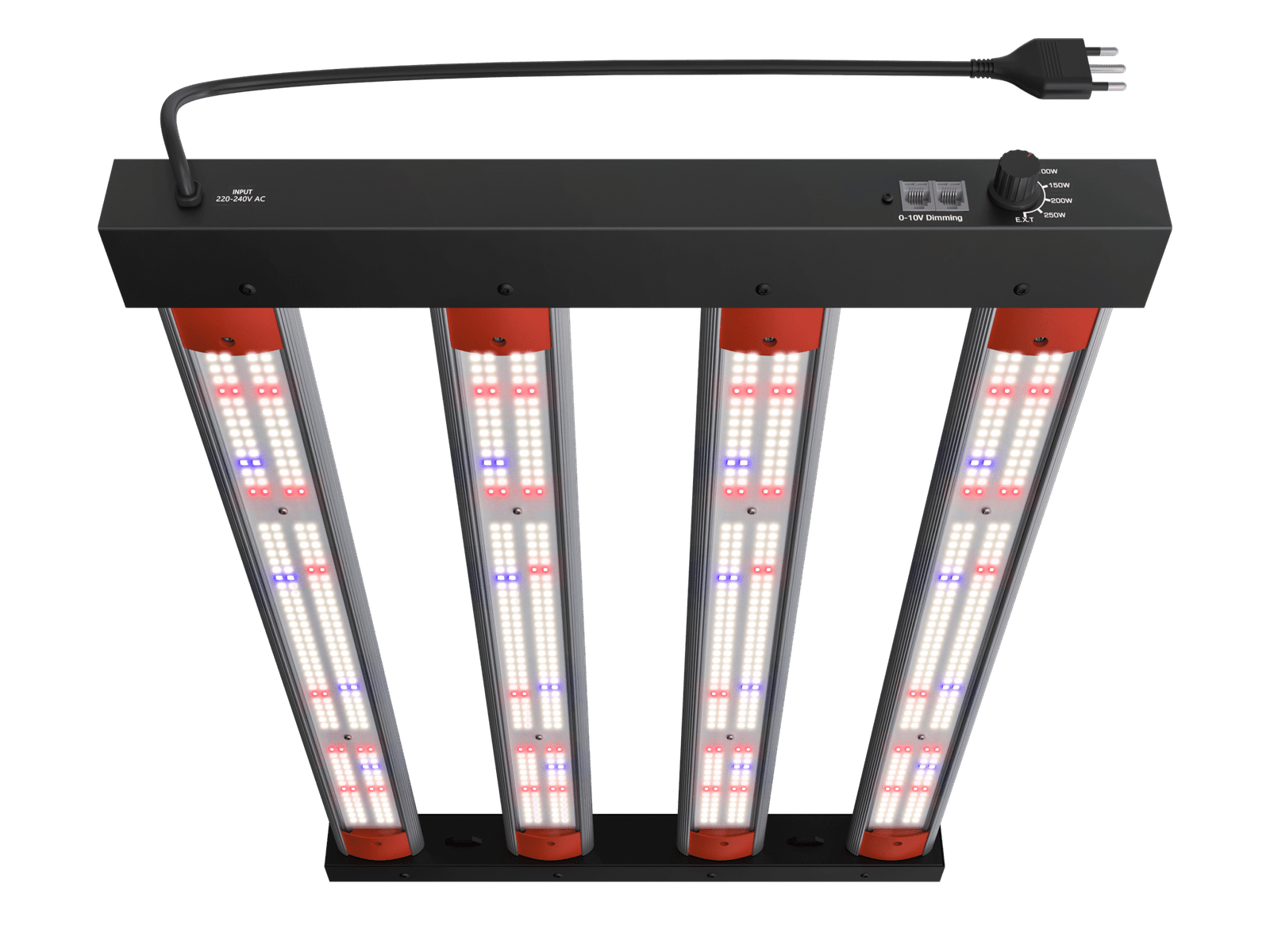
Another point to consider is the LED’s design and heat dissipation. LEDs are available integrated into a metal plate or arranged in «bars», and not all dissipate heat equally. Bar-structured LEDs generally have better heat dissipation, especially if they have an aluminum heat sink. This is an important factor to consider depending on the grow location; LED grow lights benefit from temperatures above 25°C, which are difficult to achieve in many winter areas.
Thanks to technological advancements, the driver (LED power supply) can be hidden within the LED structure, while others are screwed onto the panel frame. This allows, sometimes with a longer cable, for installation outside the grow tent, lowering the grow room temperature if needed.
A dimmable LED with a high PPFD (Power Factor Correction) can also operate at less than 100% power, thus increasing its lifespan and reducing heat emission.
Red Light (Emerson Effect in plants)
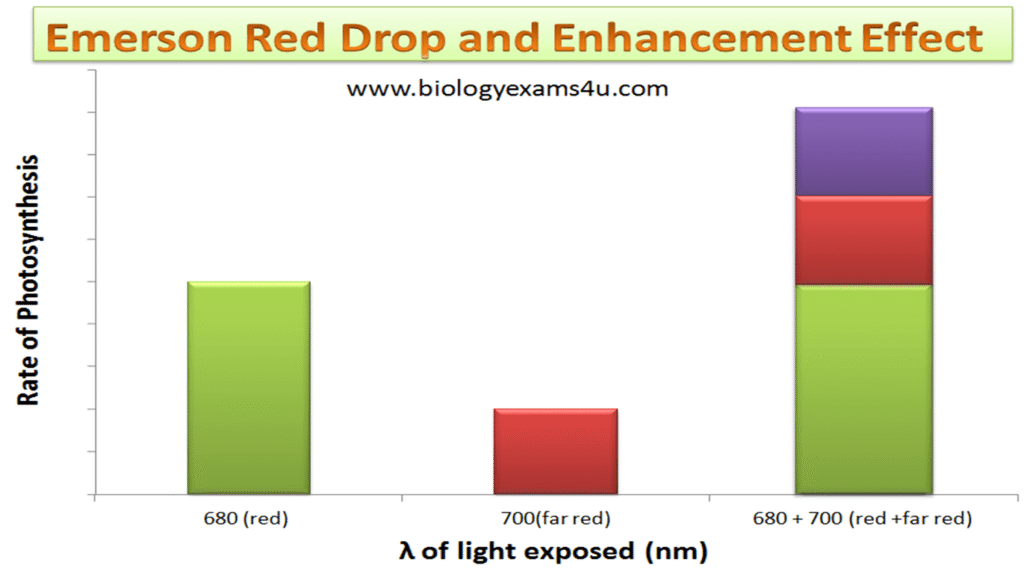
The Emerson Effect is a biological phenomenon observed in plants when they receive light with a wavelength of approximately 660-670 nm (deep red) along with red light at 700-7300 nm (far red).
It was discovered by the American scientist Robert Emerson in the 1950s while investigating photosynthesis in green algae. In 1957, Emerson reported the results of his research: a phenomenon by which photosynthesis in plants is increased when chloroplasts are exposed to light with wavelengths of 670 nm (red or deep red light) and 700 nm (far red light) simultaneously. These experiments eventually demonstrated that there are two photosynthetic reaction centers in plants.
Advantages of the Emerson Effect in plant cultivation
Below, we sumarize some of the advantages of using these types of lights for plant development and growth:
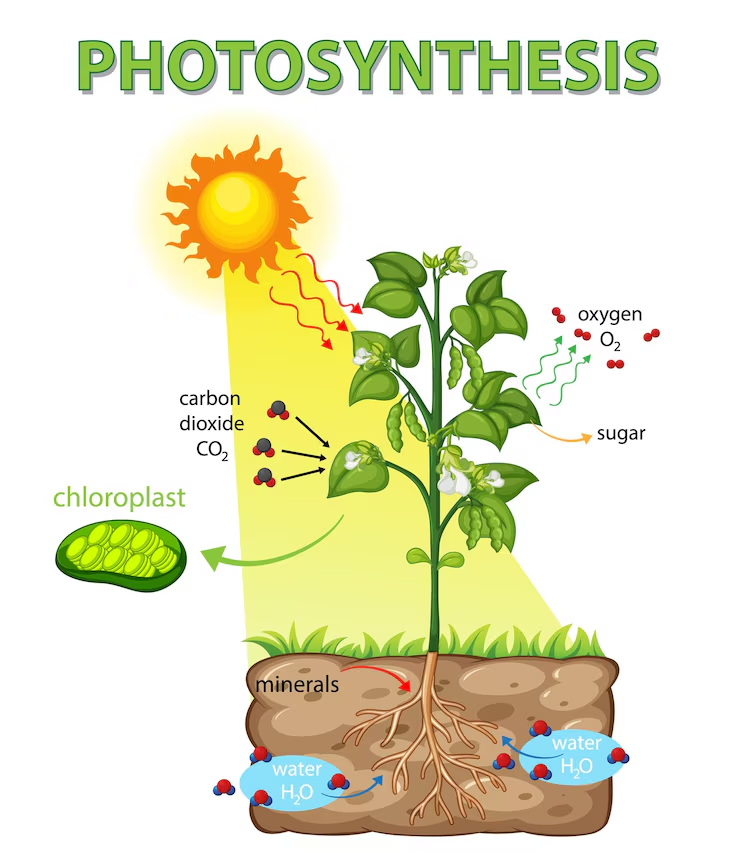
- Increased photosynthesis rate: The Emerson effect increases the photosynthetic efficiency of plants by allowing them to perform more photosynthesis in the presence of deep-red and far-red light. This results in greater production of carbohydrates and oxygen, essential for proper plant development.
- Protection against oxidative damage: Although UV light can be harmful to plant cells due to its ability to cause oxidative damage, when combined with visible light, the Emerson effect can help mitigate these negative effects. Controlled exposure to UV light can induce the synthesis of antioxidant compounds and defense proteins in plants, making them more resistant to oxidative stress.
- Stimulation of secondary metabolism: Light, at certain wavelengths, can activate the production of secondary metabolites in plants, such as flavonoids, terpenes, and cannabinoids, which have various functions. The Emerson effect can promote the biosynthesis of these beneficial compounds, increasing the plants’ resistance to pests, diseases, and adverse environmental conditions, while, in the case of cannabis, it accentuates its aroma and flavor and provides greater potency.
Use of the Emerson effect in cultivation
- Selecting the right light source: Using grow lights that emit ultraviolet (UV) light along with visible light is essential to induce the Emerson effect. Lamps specifically designed to provide light spectra that include UV ranges can be used, such as some high-intensity discharge (HID) lamps or LED grow lights, which are the best option today. Use LED lights with the necessary wavelength to achieve the Emerson effect!
- Controlling UV exposure: It is important to provide controlled UV exposure to avoid damaging the plants. This can be achieved by adjusting the intensity and duration of UV exposure according to the plant’s needs and their specific growth stage.
- Optimizing light distribution: Evenly distributing light across the growing area ensures all plants receive adequate exposure to UV and visible light.
- Constant monitoring and adjustment: Regularly monitoring plant health and growth is essential to ensure they are responding positively to the Emerson effect. If necessary, adjustments can be made to light intensity, duration or distribution to optimize results.
Turning Lamps On and Off
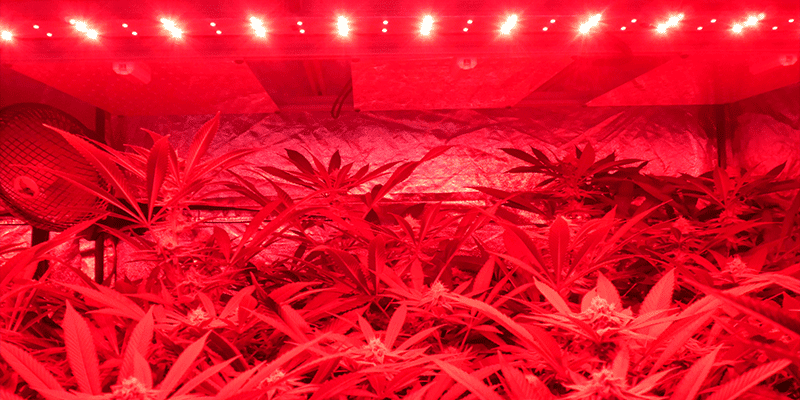
Using lamps with both types of red light (deep red and far red) involves turning them on slightly before and turning them off after the main grow light. This strategy could be turning on your red light 15 minutes before the LED panel and turning it off about 15 minutes after your main lighting system.
This creates an effect very similar to sunrise and sunset in nature, providing more light at the wavelength necessary for plants to increase their metabolism and develop much better, becoming more resistant, faster, and more productive.
Green Light in Growing
At night when the lights are off, the plants need complete and uninterrupted darkness, especially during the flowering period.
If there is any source of light pollution in the grow area during the plants’ nighttime period they could react in several undesirable ways: lengthening of the pre-flowering and flowering periods, the appearance of male flowers, or revegetation of the plants are the most common.
What is usually done to avoid disturbing the plants during their nighttime period? The best solution is to work in the grow area only when the lights are on.
Thos solution might not be the most convenient for growers, as indoor lighting equipment produces considerable heat. Therefore, it’s common to opt for better climate control in the garden by keeping the lights off during the day (when it’s hotter) and turning them on at night when temperatures drop. Considering that you need a minimum of 12 hours of total darkness daily for proper flowering, you could turn the lights on at 8:00 PM and off at 8:00 AM. This leaves a somewhat inconvenient window for working in the garden.
For this reason, green light is used to illuminate plants during their nighttime period without negatively impacting their flowering. Plants don’t seem to have photoreceptors for green light; they can’t absorb it. Therefore, lighting of this color doesn’t disturb their nighttime period and doesn’t stress the plants, causing undesirable symptoms.
WARNING: NEVER grow plants under this light because it’s only useful for viewing them at night. If they grow under green light, you’ll soon see that they are almost unable to develop and will die quickly.